
I enjoy making beef bibimbap because it combines warm rice, flavorful beef, colorful vegetables, and a rich sauce into one satisfying bowl. Every bite feels balanced with savory, fresh, and slightly spicy flavors that make this Korean-inspired dish incredibly comforting.
Why You’ll Love This Recipe
I love this recipe because it is both delicious and customizable. The combination of seasoned beef, crisp vegetables, and soft rice creates amazing texture and flavor in every spoonful. I also like how I can use different vegetables depending on what I have in the kitchen, making it a flexible and easy meal for busy days.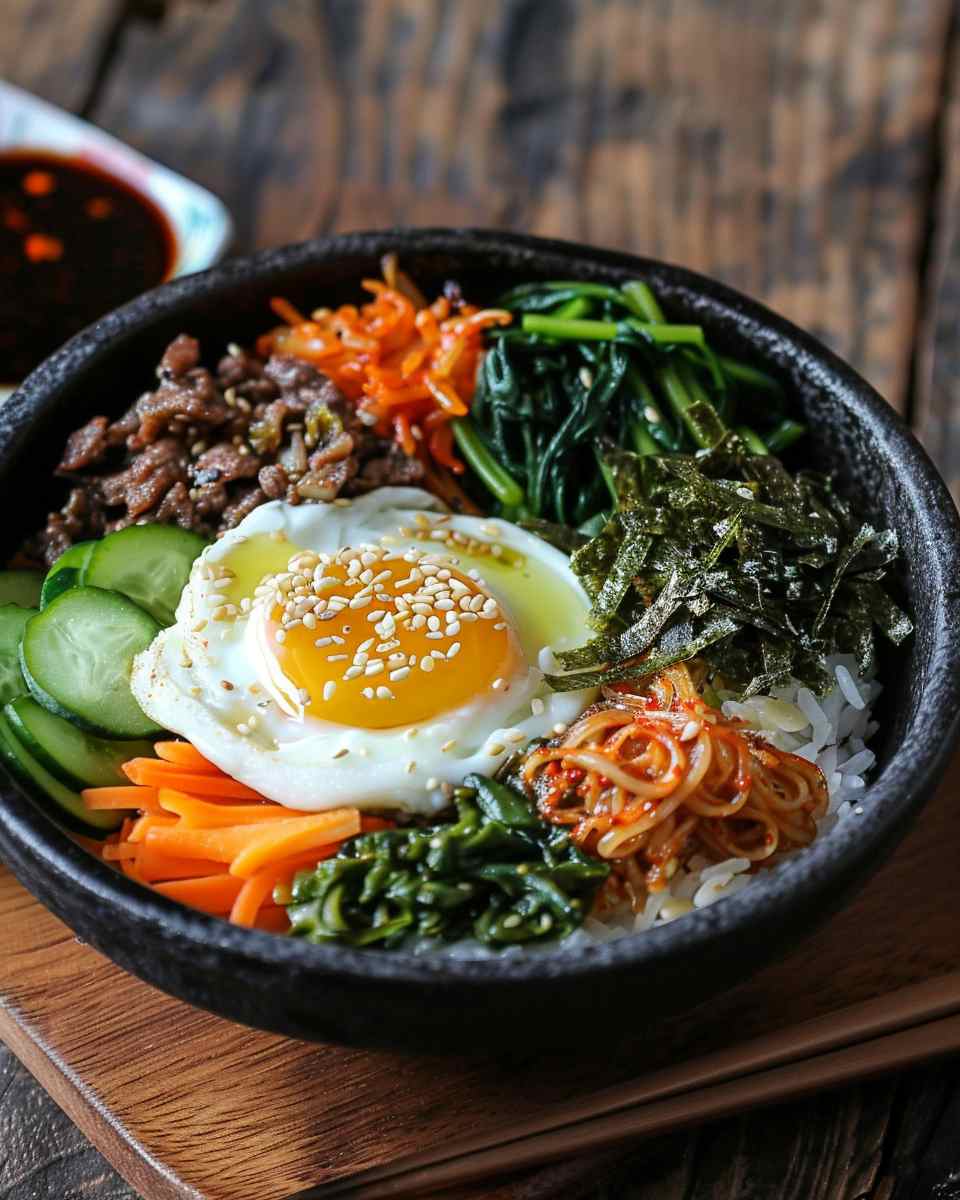
Ingredients
(Here’s a tip: Check out the full list of ingredients and measurements in the recipe card below.)
- cooked white rice
- ground beef or thinly sliced beef
- soy sauce
- sesame oil
- garlic
- brown sugar
- carrots
- spinach
- cucumber
- mushrooms
- eggs
- gochujang
- sesame seeds
- green onions
- vegetable oil
- salt
- black pepper
Directions
- I begin by cooking the rice and keeping it warm while preparing the toppings.
- In a bowl, I mix soy sauce, sesame oil, garlic, and brown sugar to season the beef.
- I cook the beef in a skillet over medium heat until browned and flavorful.
- I lightly sauté the carrots, mushrooms, and spinach separately so each vegetable keeps its texture.
- I slice the cucumber into thin strips for a fresh crunchy topping.
- I fry the eggs until the whites are set while keeping the yolks slightly runny.
- I assemble the bowls by placing rice at the bottom and arranging the beef and vegetables in sections on top.
- I place a fried egg in the center of each bowl and drizzle with gochujang sauce.
- I finish with sesame seeds and chopped green onions before serving.
Servings and timing
- Servings: 4 bowls
- Prep Time: 20 minutes
- Cook Time: 20 minutes
- Total Time: 40 minutes
Variations
I sometimes use chicken or tofu instead of beef for a different version. When I want extra spice, I add more gochujang or kimchi on the side. I also enjoy adding bean sprouts, zucchini, or pickled vegetables for more texture and flavor.
storage/reheating
I store the beef and vegetables separately from the rice in airtight containers in the refrigerator for up to 4 days. To reheat, I warm the rice and beef in a skillet or microwave before assembling the bowl again. I prefer adding fresh vegetables and the egg just before serving.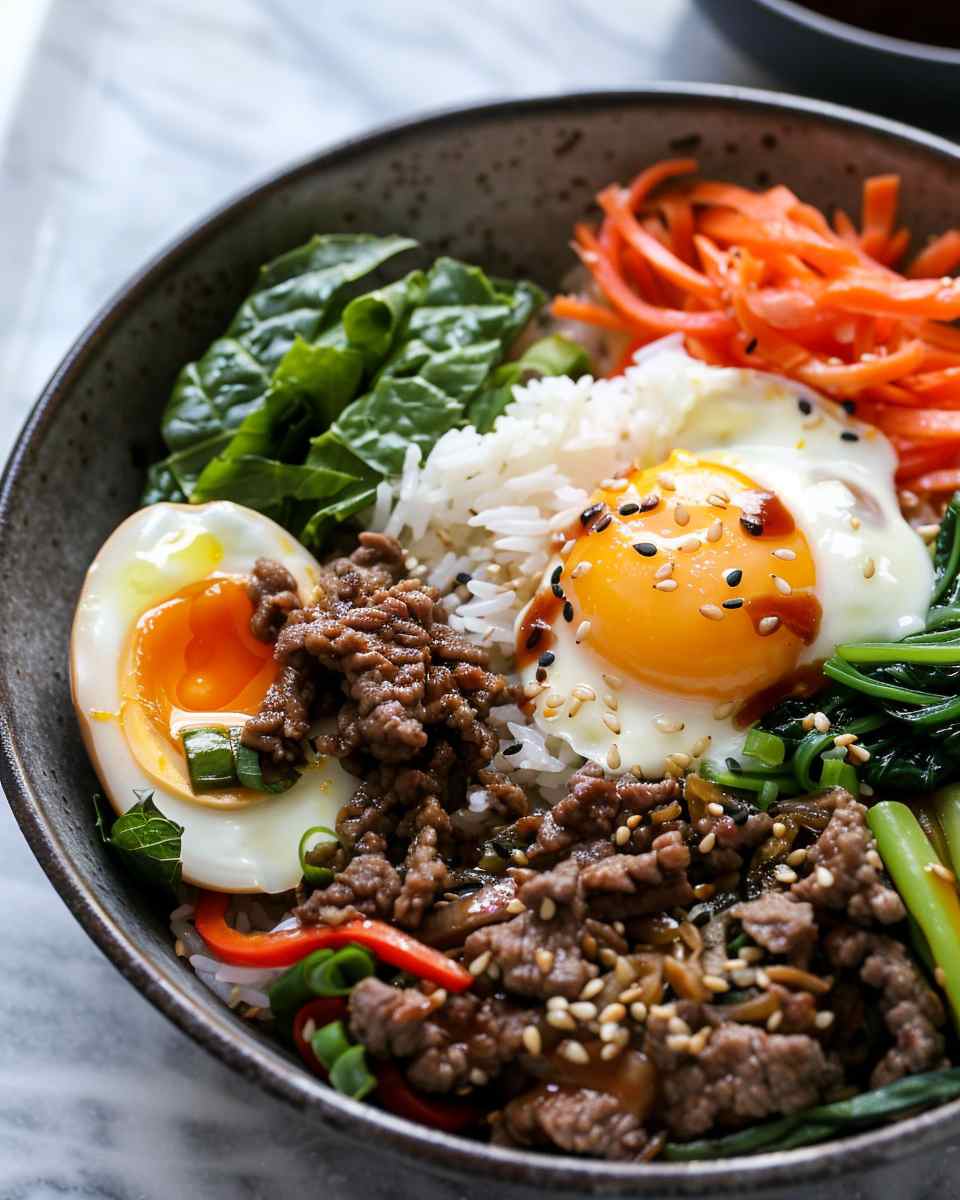
FAQs
What does bibimbap mean?
Bibimbap means mixed rice in Korean, and I mix all the ingredients together before eating.
Can I make bibimbap vegetarian?
I can replace the beef with tofu or extra vegetables for a vegetarian version.
Is bibimbap spicy?
The spice level depends on the amount of gochujang I use, so I can easily adjust it.
What type of rice works best?
I usually use short-grain white rice because it has the best texture for bibimbap.
Can I prepare bibimbap ahead of time?
I prepare the vegetables and beef ahead of time, then quickly assemble the bowls before serving.
Conclusion
I always enjoy making beef bibimbap because it is colorful, flavorful, and satisfying while still being simple enough for everyday cooking. The combination of rice, beef, vegetables, and sauce creates a balanced meal that feels both comforting and fresh.
PrintBeef Bibimbap (Korean Rice Bowl)

A flavorful Korean-inspired beef bibimbap bowl made with warm rice, seasoned beef, colorful vegetables, fried eggs, and spicy gochujang sauce for a balanced and satisfying meal.
- Prep Time: 20 minutes
- Cook Time: 20 minutes
- Total Time: 40 minutes
- Yield: 4 bowls
- Category: Main Course
- Method: Stovetop
- Cuisine: Korean
- Diet: Halal
Ingredients
- 4 cups cooked white rice
- 1 pound ground beef or thinly sliced beef
- 3 tablespoons soy sauce
- 2 tablespoons sesame oil
- 3 cloves garlic, minced
- 1 tablespoon brown sugar
- 1 cup carrots, julienned
- 2 cups spinach
- 1 cucumber, thinly sliced
- 1 cup mushrooms, sliced
- 4 eggs
- 3 tablespoons gochujang
- 1 tablespoon sesame seeds
- 2 green onions, chopped
- 1 tablespoon vegetable oil
- 1/2 teaspoon salt
- 1/4 teaspoon black pepper
Instructions
- Cook the white rice according to package instructions and keep warm.
- In a bowl, mix soy sauce, sesame oil, minced garlic, and brown sugar.
- Add the beef to the sauce mixture and stir to coat evenly.
- Heat a skillet over medium heat and cook the beef until browned and fully cooked.
- Lightly sauté the carrots, mushrooms, and spinach separately until tender while maintaining their texture.
- Slice the cucumber into thin strips for a fresh topping.
- Fry the eggs until the whites are set and the yolks remain slightly runny.
- Divide the rice among serving bowls.
- Arrange the beef, vegetables, and cucumber in sections over the rice.
- Place a fried egg in the center of each bowl and drizzle with gochujang sauce.
- Garnish with sesame seeds and chopped green onions before serving.
Notes
- Short-grain white rice works best for authentic bibimbap texture.
- Adjust the amount of gochujang to control the spice level.
- Chicken or tofu can replace the beef for different variations.
- Add kimchi, bean sprouts, zucchini, or pickled vegetables for extra flavor.
- Store rice, beef, and vegetables separately for better freshness.
- Reheat the rice and beef before assembling the bowls.
- Fresh vegetables and eggs are best added just before serving.
Nutrition
- Serving Size: 1 bowl
- Calories: 520
- Sugar: 6g
- Sodium: 860mg
- Fat: 20g
- Saturated Fat: 6g
- Unsaturated Fat: 12g
- Trans Fat: 0g
- Carbohydrates: 52g
- Fiber: 4g
- Protein: 30g
- Cholesterol: 210mg


